Is your child ready for piano? A readiness checklist for parents
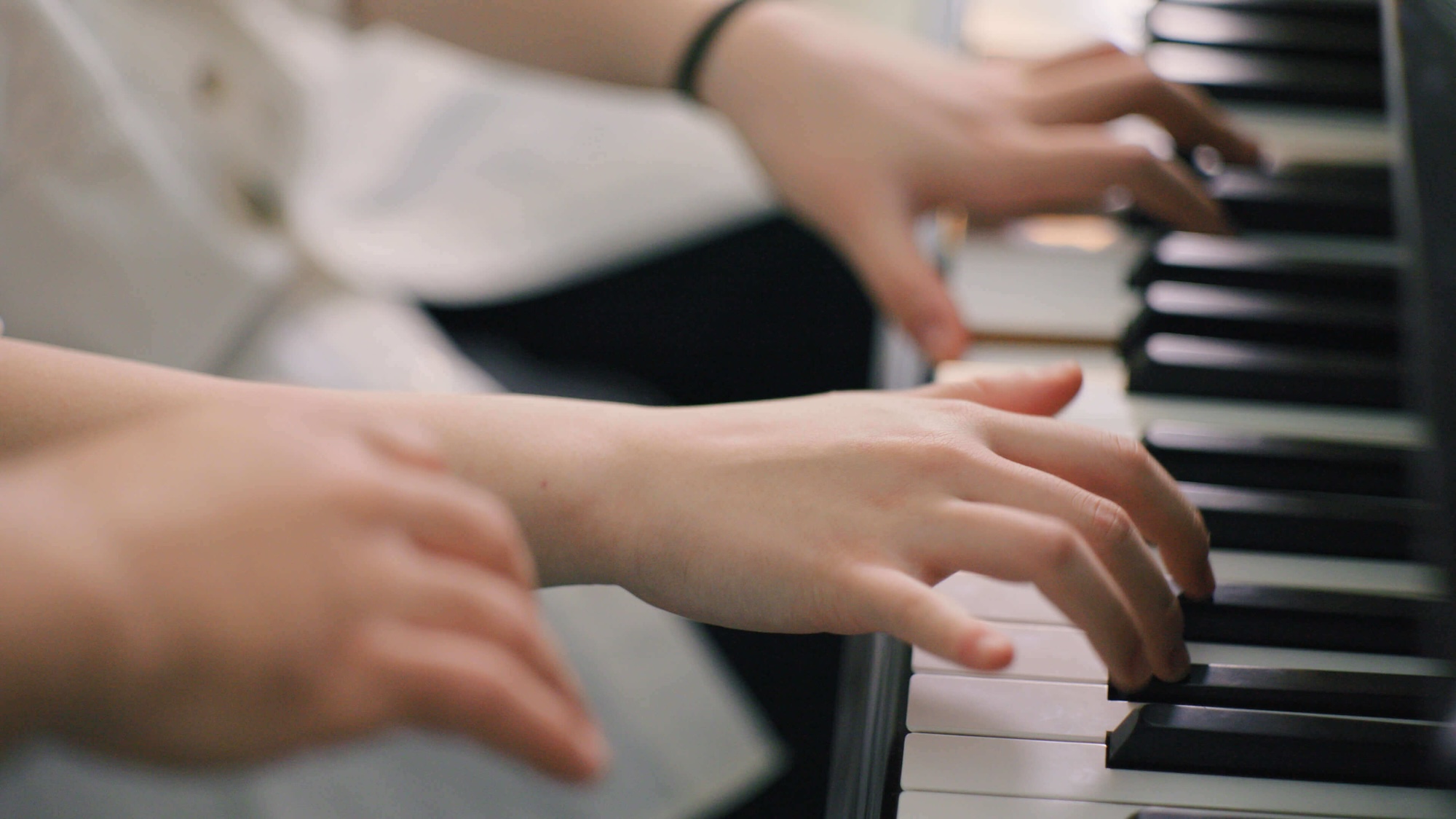
Age is one factor to determine when to start piano lessons. Learn how to complement age with developmental milestones.
You know your child is interested in piano, but is now really the time?
It's a question we hear constantly at Payam Music: with so many extracurricular activities competing for your child's time and attention, how do I know when to start piano lessons? Here's what we've learned from working with families for over a decade: age is just one part of the readiness picture.
In our previous article on the best ages to start piano, we explored the cognitive, emotional, and social benefits that piano offers at every developmental stage. The research is clear: there's no "wrong age" to start (even for adults!). But that doesn't mean every four-year-old is ready for lessons, or that every nine-year-old will thrive immediately.
This guide is designed to help you assess whether your child has the developmental readiness to benefit from piano lessons right now.
Understanding piano readiness: It's more than just age
Piano readiness is about more than chronological age. It's the combination of physical abilities, cognitive skills, emotional maturity, and genuine interest all coming together. When a child has the right mix of these factors, learning happens faster, frustration is minimal, and the experience becomes genuinely joyful.
Here's why readiness matters: Starting lessons before a child is ready often leads to frustration for everyone. The child may struggle with focus, feel discouraged by the difficulty, or simply lose interest because they can't grasp the concepts. This readiness guide will help you assess whether your child is ready to start.
Physical readiness: Can your child's hands do the work?
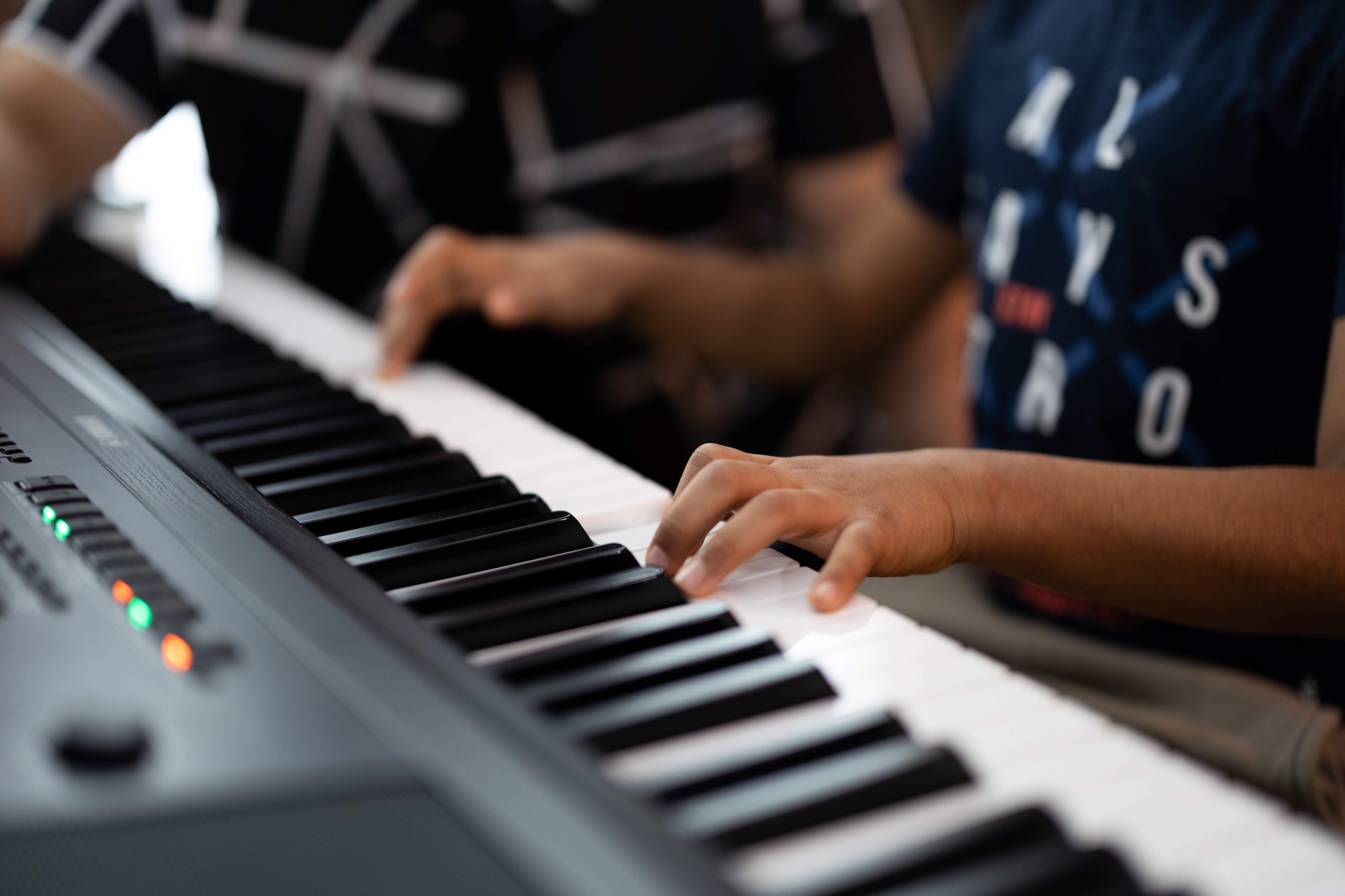
Before diving into cognitive and emotional factors, do a quick hand test.
Fine motor coordination
The foundation of piano playing is independent finger movement. Look for these signs:
- Can your child move each finger independently, or do they tend to move their hand as one unit?
- Can they coordinate both hands doing different things at the same time?
- When you watch them draw, use utensils, button buttons, or pick up small objects with their thumb and fingers, do they show control and precision?
These everyday activities are actually excellent indicators of readiness for piano. Playing piano requires finger dexterity and hand-eye coordination. If your child is still building these abilities, they may benefit from a little more time for their hands to strengthen and develop better coordination.
Why it matters: Piano requires both hands to do different things simultaneously. One hand might be playing a melody while the other provides accompaniment. If a child hasn't yet developed independent finger control, the lessons may feel more frustrating than fun.
Hand size and reach
A common concern parents have is whether their child's hands are large enough for the piano. The good news? Hand size is less critical than people think.
What matters more is whether your child can stretch their fingers comfortably across the keys without strain. Ideally, they should be able to comfortably reach across at least five white keys. Beyond that, hand strength matters. Does your child have enough strength to keep playing without their fingers getting tired?
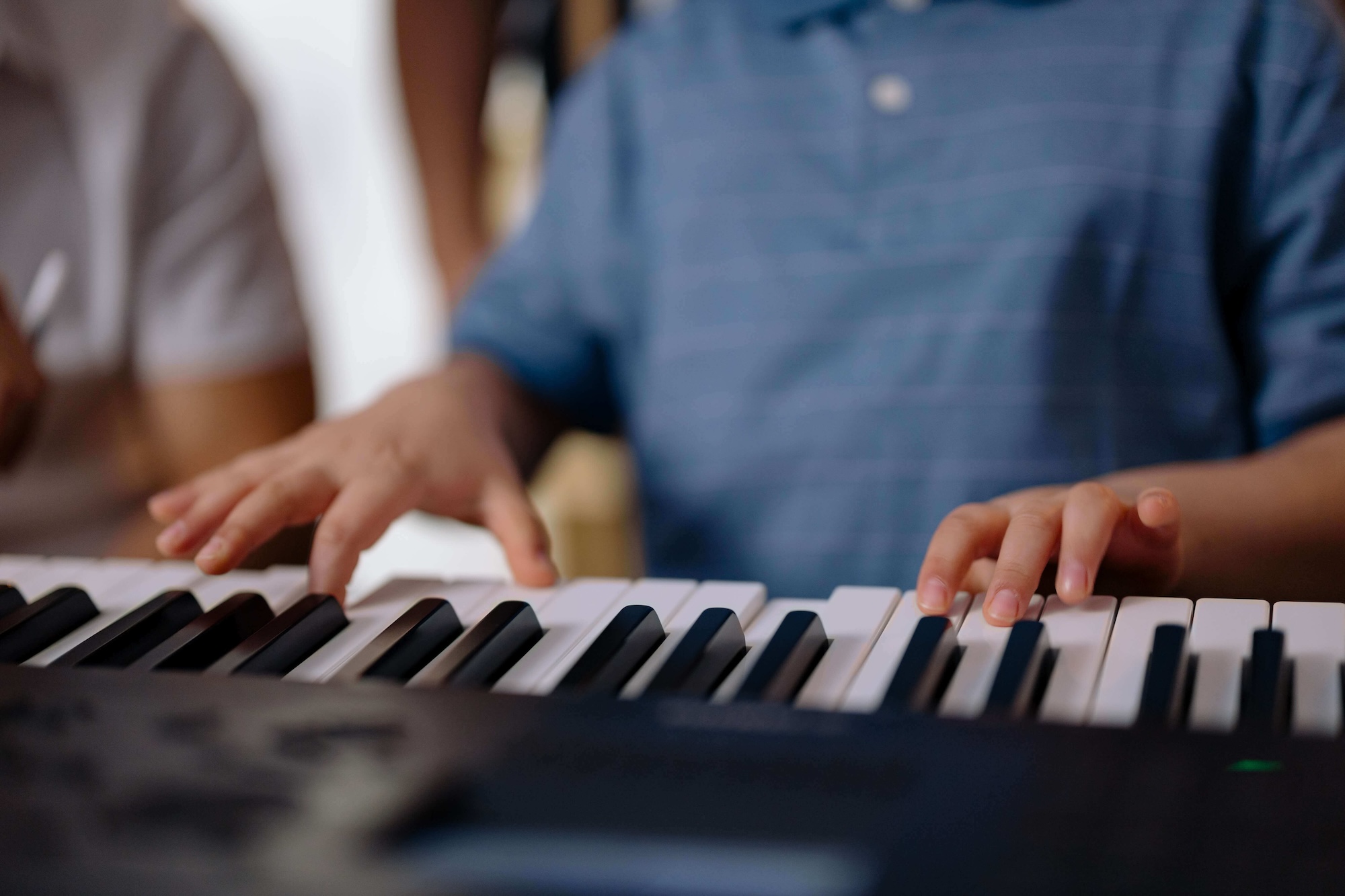
To assess whether your child's hands are ready for piano, have them place their hand naturally on a piano or keyboard and see if they can comfortably rest their fingers on five white keys in a row.
More good news: hand reach continues to develop as children grow. Some children are simply ready a bit later than their peers, and that's completely normal. If hand reach seems just slightly short, waiting 6–12 months often makes an enormous difference. Remember: there's no rush!
Cognitive readiness: Attention span, reading skills, and following instructions
Hands ready? Check! Now let’s make sure your child’s mind is ready to learn.
Attention span: the foundation of learning
One of the strongest predictors of success in piano lessons is attention span. Can your child focus on a single activity without constant distraction?
For young children ages 4–5, we look for focus for about 20 minutes. For children ages 6 and up, 30-45 minutes is more realistic. By ages 7+, children often sustain focus for 45 minutes or longer.
Here's how to assess this:
- Can your child sit through a children's book without constantly jumping to something else?
- Can they concentrate on age-appropriate games or schoolwork without needing constant redirection?
- During a regular activity, how long does their interest hold before they get restless?
Piano lessons require that kind of sustained focus. Not because we're drilling scales for 30 minutes straight (we're not!), but because the activity itself—learning to read symbols, translating them to finger movement, and coordinating with the other hand—requires mental stamina.
Why it matters: Focus isn't just about sitting still. When a child can sustain attention, they actually enjoy the lesson more. They're present, engaged, and getting the full benefit of what they're learning.
Reading skills and symbol recognition
Here's something that surprises some parents: your child doesn't need to be fluent at reading to start piano. But they do need to understand that symbols represent things.
Questions to ask:
- Does your child recognize that letters and words on a page stand for sounds and meaning?
- Can they identify simple shapes or number symbols?
- Do they understand that a picture of a cat represents the actual animal?
This might seem basic, but it's foundational for understanding music notation. In piano, every symbol—whether it's a traditional note on a staff or the alphanumeric notation used in the Payam Method—represents a specific sound and action. If your child hasn't yet grasped that symbols = meaning, they may struggle.
A note on the Payam Method: One reason the Payam Method and our curriculum works so well for early learners is that it uses alphanumeric notation—letters and numbers that children already understand—instead of traditional sheet music notation. This bridges the gap for children whose reading skills are still developing. But even with the Payam Method, your child still needs to grasp ABCs and 123s.
Understanding instructions and abstract thinking
Piano learning involves understanding abstract concepts such as: "If I press this key, this sound happens." "If I practice, I get better." "This symbol means play this note."
Things to observe:
- Can your child follow multi-step directions?
- Can they understand cause-and-effect relationships?
- Can they follow "Put your hand here, then press this key"? Or do they need very simple, one-step instructions?
Understanding that their actions lead to specific outcomes is one of the foundations of cause-and-effect thinking and important for learning piano.
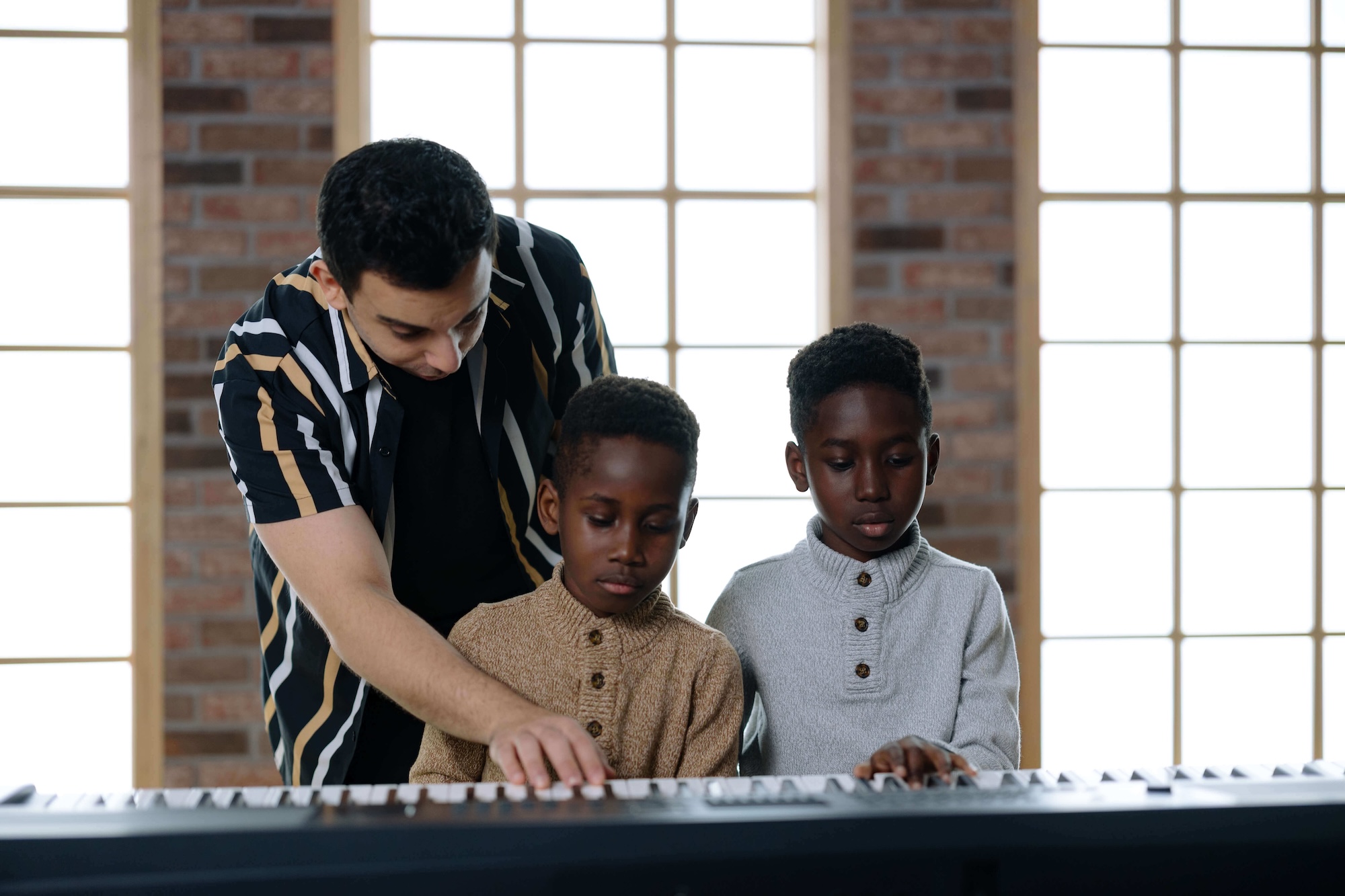
Emotional and behavioral readiness: Who wants to learn piano?
Believe it or not, emotional readiness might be the most important factor of all. A child who wants to learn piano will persist through challenges, embrace feedback, and actually want to practice.
Emotional regulation
Learning an instrument involves encountering something new and unfamiliar, then reinforcing it until it feels natural. Emotional readiness helps students stay positive and engaged as skills become more automatic over time.
Think about these questions:
- Does your child handle mild frustration without extreme outbursts?
- Can they stay engaged even when something feels new or unfamiliar?
- Are they able to accept constructive feedback without shutting down?
These aren't questions about perfection! Children are naturally frustrated sometimes and that's totally age-appropriate. And while learning piano will teach them how to persevere, they should demonstrate this ability to accept challenges in other parts of their life too.
Piano inevitably involves moments of "I can't do this yet." That’s the beauty of learning a musical instrument: it's actually where the learning happens. But a child needs enough emotional regulation to work through those moments rather than just quitting.
Why it matters: Emotional regulation directly impacts how a child experiences piano. A child who can handle frustration will experience the satisfaction of improving. A child without that capacity might just feel defeated.
Interest and motivation: the magic ingredient
Internal motivation is one of the strongest predictors of success in piano. The child needs to want to learn piano… not just the parent.
Ways to tell if your child is motivated:
- Does your child show genuine interest in music or piano?
- Do they ask about it, or want to explore the piano
- When you mention the idea of lessons, do they show enthusiasm or curiosity?
Don’t get us wrong: encouragement is great, but pushing too hard is not. A child who's curious about piano, even if they're not begging for lessons, will typically thrive. A child who's being forced by a parent but has no internal motivation will likely struggle.
Research on music learning consistently shows that children who choose to learn outperform those who don’t want to do it. The difference isn't small—it's significant. So before enrolling your child in lessons, ask yourself: Is this coming from their interest, or from my hopes for them?
Both can coexist and often do! But if your child shows zero interest and you're driving the decision entirely, it might be worth waiting until that spark appears.
Behavioral maturity
Finally, does your child have the behavioral maturity to work with a teacher?
This doesn't mean being perfectly still (children are often wiggly, and that's fine). It means being able to stay mentally engaged in an activity, even if their body is expressive or active. If they show respect for an adult authority figure like a teacher, they are likely ready.
These behaviors allow a child to benefit from instruction. Without demonstrated readiness, even the best teacher struggles to create a meaningful learning experience.
Factors that help (but aren't required)
Some children come to piano with advantages that make the learning process even smoother. If your child has these, great! If not, don't worry—plenty of successful piano students start without them.
Musical background
Does your child sing, like listening to music, or go to live performances? Can they keep a steady rhythm or clap along to music?
These experiences create a foundation that can help. A child who's spent time with music has already developed an ear for it. But—and this is important—a complete lack of musical background is not a barrier. Many children begin piano with zero musical experience and thrive. The musical foundation is helpful but not necessary.
Academic performance
Children who are doing well in school, especially in math, reading, and language arts, often pick up piano quickly. There's overlap between the skills required for these subjects and piano learning.
But here's the flip side: struggling students also benefit from piano. In fact, research suggests that piano learning can help support academic development. So if your child is struggling in school, that's not a reason to avoid piano—it might actually be a reason to pursue it.
Family support
Your child doesn't need a musically-trained parent supporting them. What they do need is a parent or guardian who's willing to make the commitment.
This might look like driving them to lessons, helping them practice (without needing to know anything about music yourself), celebrating their progress, and maintaining realistic expectations about the timeline for improvement. All of these are learnable! You don't need musical skill to be a great support system.
Access to an instrument also matters, whether that's an acoustic piano or a digital keyboard.
The free trial lesson: your readiness test
You've gone through this checklist. You have a sense of where your child stands. Now what?
Here's where a free trial lesson becomes invaluable. A good trial lesson reveals things that a checklist can't.
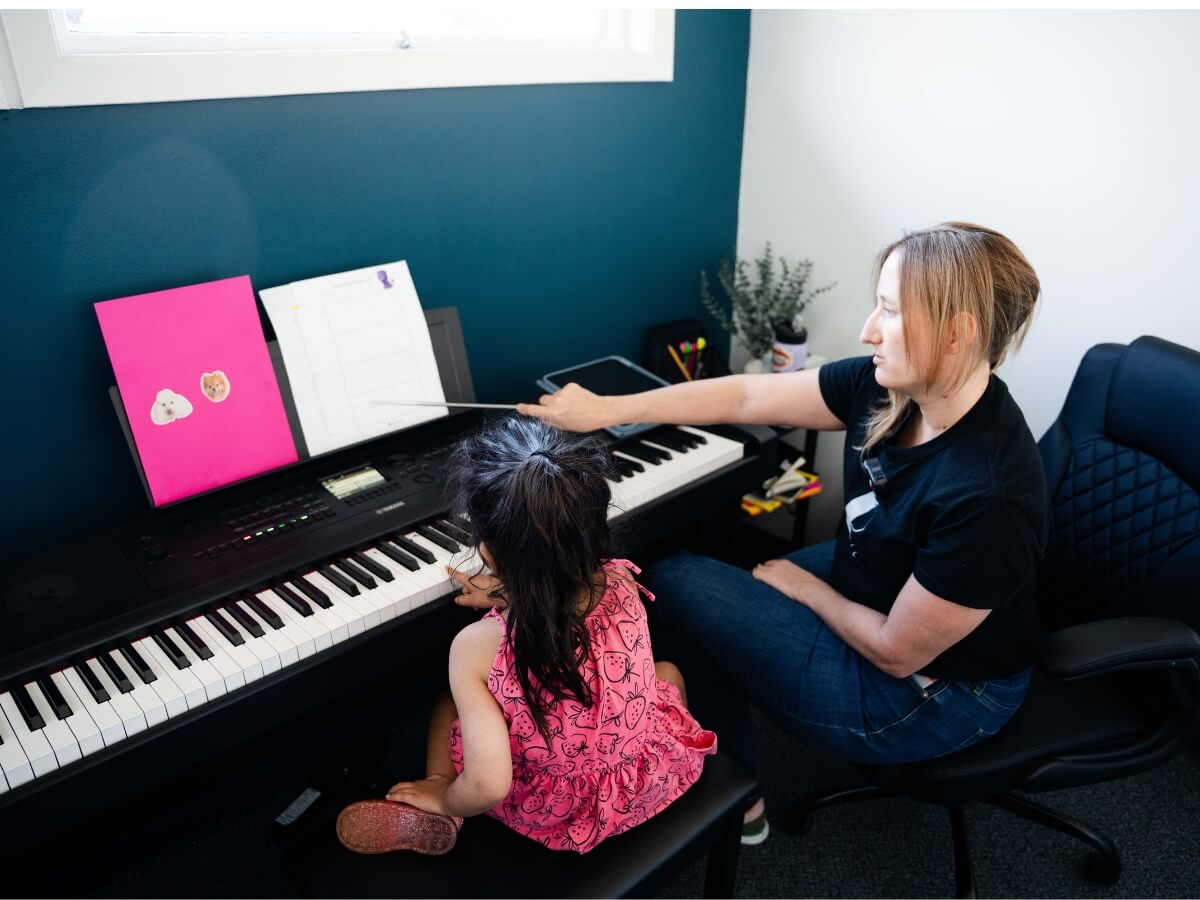
In 20–30 minutes, a trial lesson can offer a clear picture of how a child engages with the material and how well they focus and follow instructions.
You can also watch what happens during the trial lesson. Can the teacher engage your child? Does your child show curiosity about the piano and the learning process? Can they follow instructions? Are they comfortable with the teacher? Do they seem excited or at least interested as they leave?
These observations give you real data about whether now is the right time.
Remember: age alone doesn't determine readiness! The right developmental readiness, combined with genuine interest, creates the perfect conditions for learning. When all the pieces align—when your child's hands can do the work, their brain can grasp the concepts, their emotions can handle the learning process, and their heart is genuinely interested—that's when the magic of piano really begins.
Ready to schedule a trial lesson? Find a Payam Music location near you and book your free trial lesson. We will assess your child's readiness in person and answer your questions about the best next steps for your family.