

The best ages to start piano
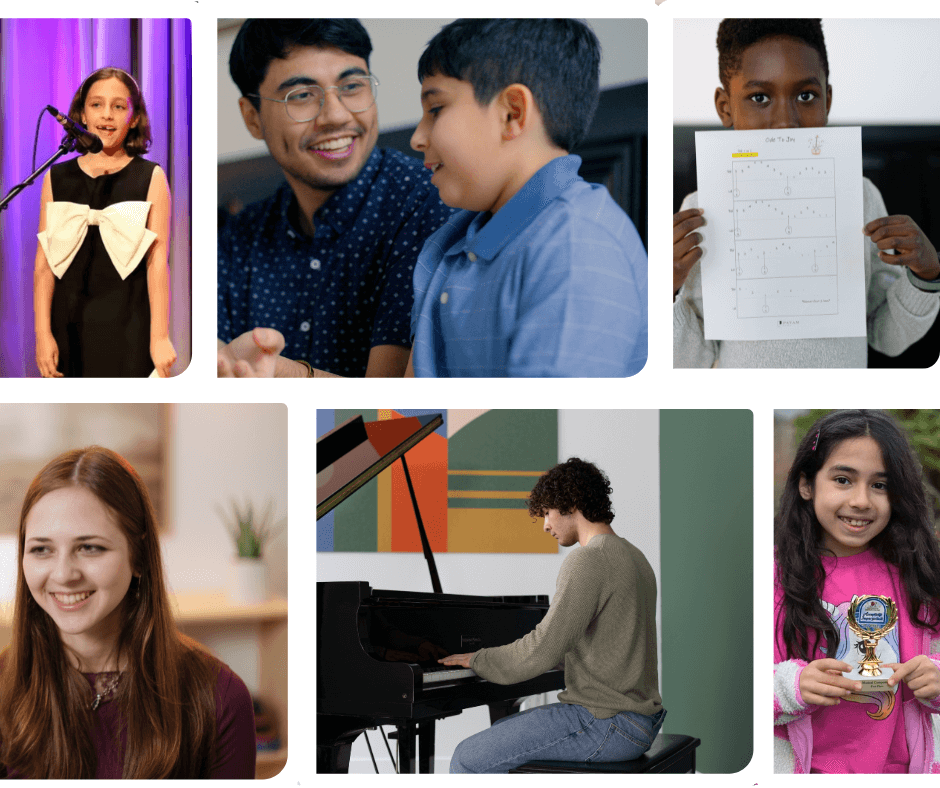
Here's what the research actually shows: there is no wrong age to start piano.
Introduction: There is no wrong age to start piano
If you're a parent wondering whether now is the right time for your child to start piano lessons, or an adult thinking you’re too old to start lessons, you're not alone. This question comes up constantly when we meet with prospective students, and for good reason. With so many options for extra curricular activities, it's natural to ask: Is there a perfect age? Will my child be too young? Or too old? What if I want to take lessons too? Am I too old?
Here's what the research actually shows: there is no wrong age to start piano. There are benefits at every developmental stage, from preschoolers to seniors. The key is recognizing what piano can offer a student at their current age because there are clear advantages at every age.
Readiness to start lessons depends on a combination of factors including fine-motor coordination, attention span, emotional regulation, and the ability to understand abstract concepts. But across all these developmental windows, piano creates measurable benefits for the brain, heart, and overall wellbeing.
Clearly we’re biased, but the only “wrong time” to begin is never.
Ages 4–5: Foundations and early brain connections
Young preschoolers are entering a magical window for brain development. While their fine-motor coordination is still emerging and their attention span hovers around 20-30 minutes, this age presents a unique opportunity for early music exposure.
Research consistently shows that early music engagement boosts spatial-temporal reasoning: the mental skills that underlie math, engineering, and problem-solving. Music also accelerates language development, as children's brains are highly attuned to patterns, rhythm, and sound. Learning to identify notes, play them on the piano, and connect them into simple melodies activates important neural pathways.
For young learners, piano at this age isn't primarily about producing perfect music. Instead, it's about nurturing confidence and curiosity. A four-year-old pressing piano keys for the first time experiences discovery and the joy of creating sound. That emotional positive association with music is powerful: it wires the brain for a lifetime of learning and creative expression.
The benefits at this age are foundational, laying a foundation that supports cognitive development for years to come.
Ages 6–8: The neural sweet spot
Elementary school-age children hit a remarkable developmental window. Their memory capacity, planning skills, and ability to focus expand dramatically. Neuroscience research shows that during this stage, children are especially well equipped to build more complex motor and cognitive skills, including piano, while still benefiting greatly from earlier musical experiences.
At this stage, children's brains are highly plastic and primed for multi-sensory learning. When a child learns piano, they're simultaneously reading symbols, processing auditory information, coordinating their hands, and building patterns in their mind. This multi-sensory approach activates multiple brain regions at once, strengthening neural connections that support literacy, math, and executive function.
Studies have shown that music training at this age measurably improves reading ability and language skills. Why? Because music and language activate overlapping neural systems. Learning rhythm, pitch, and phrasing on piano reinforces phonemic awareness–the ability to hear, identify, and manipulate the individual sounds (phonemes) in spoken words–which is fundamental to reading. Our curriculum and alphanumeric notation reinforces these concepts in a language children understand.
The compounding effect is significant: a child who starts at six or seven can build genuine skill and early mastery experiences by late elementary, especially with the Payam Method.
Ages 9–11: Abstract thinking and skill building
Late elementary marks another cognitive leap. Children's abstract thinking skills mature, allowing them to understand concepts that younger children simply can't grasp like fractions and the idea that a symbol represents a sound. These abstract connections suddenly start to click.
Learning to read music, understand patterns, and master techniques engages the same reasoning pathways involved in math. The effect appears to work both ways: as children understand fractions in math class, their understanding of rhythm and note values deepens.
Beyond cognition, this age brings genuine confidence through competence. A nine-year-old can grasp that practice directly results in improvement, can begin to set realistic goals, and can experience the satisfaction of mastering increasingly complex songs. The confidence-building effect extends to the classroom and sports, too. Children who feel capable on piano often carry that sense of competence at school.
Middle school: An emotional outlet and path to self-expression
Middle school brings new social and emotional challenges alongside important personal growth.
Hormonal fluctuations, shifting peer dynamics, and the search for identity create real stress and emotional upheaval for young teens. This is exactly when having an outlet like a musical instrument becomes really important.
Music offers a safe, structured outlet for the complex feelings that emerge during adolescence. A student frustrated with peers can channel emotion into playing. A middle schooler navigating anxiety can find calm through the focused attention piano requires. Music activates the brain's reward system, releasing dopamine and supporting emotional balance during a volatile developmental stage. One parent of a teenage student told us, “I can figure out what kind of day she had at school by listening to how she’s playing the piano.”
Beyond regulation, music during these years supports emotional recognition and resilience. Students learn to recognize and express subtle emotional nuances in music. They experience the vulnerability of performance and the resilience that comes from pushing through difficulty. They discover an identity beyond school labels—"I'm a musician"—which strengthens the sense of self during a time when identity feels fragile.
High school: Stress relief and social connection
High school brings real academic and social pressure. College applications, standardized tests, social competition, and increased workload create genuine stress. Piano becomes a refuge.
Playing piano requires focus that pulls teens away from day-to-day stress. The physical act of playing engages the body in a way that calms the nervous system. For many high schoolers, piano time becomes sacred unscheduled time, rare and precious in a packed schedule.
Beyond individual benefit, high school piano opens doors to community and collaboration. Students can accompany singers, play in ensembles, or perform in recitals. These experiences build confidence, create meaningful friendships, and develop leadership skills. A student who plays piano has something to contribute: a valued role in the school community.
Adults: Brain health, creativity, and stress relief
One of the most transformative discoveries from neuroscience research is that adult brains remain highly plastic. Learning piano as an adult engages multiple cognitive systems simultaneously: memory (learning pieces and theory), fine motor coordination (finger dexterity), auditory processing (hearing and reproducing pitches), and executive function (planning and problem-solving).
Research on music and adult cognition shows measurable improvements in verbal memory, visual-spatial reasoning, and processing speed. Learning piano at 30, 40, or 50 years old builds cognitive reserve: the brain's resilience and ability to maintain function as we age.
Beyond cognition, adults consistently report that piano learning brings profound stress relief and creative fulfillment. The focused attention piano requires is meditative. The sense of creating something beautiful feeds the soul. Many adults approach piano lessons with fresh motivation: they're choosing to learn, not being required to, and that agency transforms the experience.
Parents of school-age children have also told us that learning to play piano has created unexpected bonds with their children. An adult student shared, “One of the most unexpected gifts has been how this has deepened my connection with my son. He’s a talented guitarist, and for the first time, I feel like I can truly understand and speak his “music language.” Being able to share conversations about chords, rhythm, and songwriting has brought us even closer.”
Seniors and retirees: Cognitive protection and quality of life
Retirement brings time, and piano is an ideal way to fill that time. Senior musicians show measurably better memory, processing speed, and cognitive flexibility compared to peers who aren't musically active.
More importantly, learning piano (or continuing piano) in later years supports brain health and emotional wellbeing. The cognitive engagement of learning new pieces, the pleasure of playing, and the sense of purpose all contribute to healthier aging. Some research suggests that active music engagement may delay the onset of dementia or slow its progression.
Conclusion: It's always the right time
Again, we’re biased, but learning piano really is valuable at every age and stage of life. A four-year-old gains early cognitive wiring and confidence. A first-grader hits a neural sweet spot for accelerated learning. A teenager finds emotional refuge and identity. An adult relieves stress and potentially builds bonds with their child. A senior protects brain health and discovers joy.
Starting piano isn't about finding some mythical "perfect age." It's about understanding what your child, teen, or yourself needs right now and recognizing that piano can offer it.
Whether your child is four or fourteen, whether you're 35 or 75, it's never too late and never too early to begin. What matters is taking that first step.
At Payam Music, we believe every age brings unique readiness and potential. We'd love to explore what piano could offer at your child's or your own developmental stage.
Ready to discover how piano could transform your life at any age? Schedule your free trial lesson with Payam Music today.
FAQs: The best ages to start piano lessons
General questions about starting piano
What is the best age to start piano lessons?
There's no single "best" age—piano benefits students at every developmental stage. However, ages 6–8 represent a particularly strong window: children's memory, focus, and motor coordination are rapidly developing, and research shows measurable improvements in reading ability and language skills at this stage. That said, a 4-year-old gains foundational cognitive wiring and confidence, while an adult experiences profound stress relief and creative fulfillment. The best age is when your child (or you) are ready and motivated.
Is 4 years old too young to start piano?
No. Ages 4–5 are an ideal time for early music exposure. At this age, children's brains are entering a magical window for development. Early music engagement boosts spatial-temporal reasoning—the mental skills that underlie math and problem-solving—and accelerates language development. While fine-motor coordination is still emerging and attention spans hover around 20–30 minutes, piano at this age builds confidence, curiosity, and neural pathways that support cognitive development for years to come. The focus isn't on perfect playing, it's on nurturing joy and discovery.
When should I start my child on piano?
Start when your child demonstrates readiness across several factors: developing fine-motor coordination, an attention span of at least 20 minutes, emotional regulation, and curiosity about music. Most children show these signs between ages 4–6, though every child develops differently. Watch for signs your child is interested in music, can follow simple instructions, and shows patience with repetitive activities. If you're unsure, a free trial lesson can help assess readiness.
Can a 3-year-old learn piano?
While some exceptionally gifted 3-year-olds might enjoy beginner piano activities, most children this age lack the fine-motor coordination and sustained attention required for structured lessons. However, musical exposure like singing, listening, and playing with sounds is wonderful at this age. Consider waiting until your child turns 4 or 5, when they're better equipped to benefit from formal instruction and can sustain focus for a full lesson.
What age is too late to start piano?
There is no age that's too late. Adult brains remain highly plastic and capable of learning complex new skills. People in their 30s, 40s, 50s, 60s, and beyond benefit tremendously from piano lessons. Research shows that learning piano as an adult improves verbal memory, visual-spatial reasoning, and processing speed. Seniors specifically see measurable benefits in memory, cognitive flexibility, and emotional wellbeing. If you've ever wondered whether you're too old, the answer is no. You're exactly the right age to start.
Age-specific questions
Is 6 years old a good age to start piano?
Yes, ages 6–8 represent what neuroscience researchers call a "neural sweet spot." At this stage, children's memory capacity, planning skills, and ability to focus expand dramatically while their brains remain highly plastic. They benefit from earlier musical experiences and are well-equipped to build complex motor and cognitive skills. Studies show that music training at this age measurably improves reading ability and language skills. If your child is in this window, it's an excellent time to start.
Can an 8-year-old learn piano?
Absolutely. An 8-year-old is at an ideal age to start piano. They have stronger motor coordination and focus than younger children, abstract thinking is beginning to develop, and they can grasp that practice leads to improvement. They can set realistic goals and experience genuine confidence through competence. By late elementary, an 8-year-old can build skill and early mastery experiences, especially with a structured method like the Payam Method that uses alphanumeric notation children understand.
Is 10 too old to start piano?
Not at all. At ages 9–11, children experience another cognitive leap. Their abstract thinking skills mature, allowing them to understand concepts like fractions and how a symbol represents a sound. Learning to read music engages the same reasoning pathways involved in math. Late elementary children also experience confidence through competence. They understand practice leads to improvement and can feel genuinely capable on the piano. Many successful piano students start at 10 or older.
Can teenagers start piano lessons?
Yes. While the optimal window for accelerated learning may have passed, teenagers benefit deeply from piano for emotional and social reasons. Middle school and high school are stressful periods, and piano offers a safe, structured outlet for complex emotions. It provides stress relief, supports emotional expression and resilience, and creates opportunities for community and collaboration through ensembles and performances. Teenagers can also still learn piano quickly and can experience the confidence that comes from mastering something challenging.
Is it too late to learn piano at 50?
No. Adults at 50 (and beyond) who learn piano show measurable improvements in verbal memory, visual-spatial reasoning, and processing speed. Learning engages multiple cognitive systems: memory, fine-motor coordination, auditory processing, and executive function. Many adults find piano deeply fulfilling, reporting profound stress relief and creative satisfaction. Learning at 50 builds cognitive reserve aka the brain's resilience and ability to maintain function as you age.
Can you start piano at 60 or older?
Absolutely. Seniors and retirees benefit tremendously from piano. Musicians over 60 show measurably better memory, processing speed, and cognitive flexibility compared to non-musical peers. Learning piano (or continuing to play) supports brain health and emotional wellbeing. The cognitive engagement of learning new pieces, the pleasure of playing, and the sense of purpose all contribute to healthier aging. Some research suggests active music engagement may delay the onset of dementia or slow its progression. Retirement is an ideal time to start, with both time and motivation on your side.
Developmental and learning questions
What are the cognitive benefits of starting piano at different ages?
Piano benefits cognition at every age, but differently:
- Ages 4–5: Boosts spatial-temporal reasoning and accelerates language development through early music exposure
- Ages 6–8: Measurably improves reading ability and language skills; strengthens neural connections supporting literacy, math, and executive function
- Ages 9–11: Engages abstract thinking pathways; the same reasoning used for music applies to math concepts like fractions
- Teenagers: Develops emotional recognition and resilience through music expression and performance
- Adults: Improves verbal memory, visual-spatial reasoning, and processing speed; builds cognitive reserve for healthy aging
- Seniors: Supports memory, cognitive flexibility, and may help delay cognitive decline
Does learning piano help with reading?
Yes. Research shows music training measurably improves reading ability, especially when started before age 8. Why? Music and language activate overlapping neural systems. Learning rhythm, pitch, and phrasing reinforces phonemic awareness—the ability to hear, identify, and manipulate individual sounds in spoken words—which is fundamental to reading. The Payam Method's alphanumeric notation also reinforces these concepts in a language children understand, creating additional reading reinforcement.
Can piano help with focus and attention?
Yes. Piano requires sustained focus and multi-sensory learning: reading symbols, processing auditory information, coordinating hands, and building patterns simultaneously. This multi-sensory approach activates multiple brain regions and strengthens neural connections that support executive function. For children, regular piano practice helps develop longer attention spans. For teenagers and adults, piano requires focus that pulls them away from day-to-day stress, providing meditative benefits.
How long should piano lessons be for each age group?
While the blog doesn't specify exact lesson lengths by age, readiness typically aligns with attention span. Young preschoolers (4–5) have attention spans around 20–30 minutes, while older children and adults can sustain longer sessions. Many piano teachers structure lessons to match developmental attention spans, with shorter sessions for young learners and gradually longer lessons as they mature.
Emotional and social benefits
Is piano good for anxiety?
Yes, piano can significantly help with anxiety. Music activates the brain's reward system, releasing dopamine and supporting emotional balance. The focused attention piano requires is meditative. For middle schoolers navigating anxiety, piano provides calm through focused attention. Adults consistently report that piano learning brings profound stress relief. High schoolers under academic pressure find piano a refuge from day-to-day stress. The physical act of playing engages the body in a way that calms the nervous system.
Can piano help with emotional regulation in teenagers?
Absolutely. Middle school and high school are periods of hormonal fluctuation, shifting peer dynamics, and identity formation. Piano offers a safe, structured outlet for the complex feelings that emerge during adolescence. A student frustrated with peers can channel emotion into playing. Music supports emotional recognition and resilience: students learn to express subtle emotional nuances. Performance experiences build resilience and vulnerability. Many teens discover identity as "a musician," which strengthens their sense of self during a fragile period. One parent said, "I can figure out what kind of day she had at school by listening to how she's playing the piano."
Does playing piano help build confidence in children?
Yes. Confidence builds through competence. When children understand that practice directly results in improvement, they can set realistic goals and experience the satisfaction of mastering increasingly complex pieces. This confidence-building effect extends beyond piano: children who feel capable at the piano often carry that competence to school and sports. Playing music also creates identity beyond school labels, strengthening a sense of self.
Can piano create a bond between parents and children?
Yes, one of the unexpected gifts parents discover is how learning piano deepens connection with their children. An adult student shared: "One of the most unexpected gifts has been how this has deepened my connection with my son. He's a talented guitarist, and for the first time, I feel like I can truly understand and speak his 'music language.' Being able to share conversations about chords, rhythm, and songwriting has brought us even closer." Parents who learn alongside their children or support their children's learning often report strengthened relationships.
Method and approach questions
What is the Payam Method?
The Payam Method is an innovative alphanumeric notation teaching system designed to help students learn piano faster than traditional approaches. Rather than standard musical notation, it starts with alphanumeric symbols that children understand, making music reading more intuitive. This approach reinforces language and reading concepts while accelerating piano learning and musical understanding.
Why is the Payam Method effective for young learners?
The Payam Method's alphanumeric notation aligns with how young children's brains process symbols and language. This approach reinforces phonemic awareness and reading skills while teaching music. It makes abstract concepts concrete and understandable, allowing children to build skill and confidence faster than with traditional notation alone.
Can adults use the Payam Method?
Yes. While developed with young learners in mind, the Payam Method's clear, intuitive system benefits adult learners as well. Adults appreciate the logical structure and faster progression to playing recognizable pieces, which maintains motivation. The method removes barriers to learning that sometimes discourage adult beginners.
Starting & next steps
How do I know if my child is ready for piano lessons?
Your child is likely ready when they demonstrate:
- Developing fine-motor coordination (ability to manipulate small objects with control)
- Attention span of at least 20 minutes
- Emotional regulation (ability to handle frustration without extreme outbursts)
- Understanding of abstract concepts (comprehending that a symbol represents something else)
- Curiosity about music or interest when prompted
- Ability to follow instructions
Every child develops differently. If you're unsure, a free trial lesson with a piano teacher can assess readiness and provide personalized recommendations.
What if I'm an adult wanting to learn piano? Where do I start?
If you're interested in learning piano as an adult, start with a trial lesson. This allows you to meet an instructor, discuss your goals and experience level, and determine what learning approach works for you. Many adult students find that having agency in their learning transforms the experience. There's no prerequisite experience needed; adult brains remain highly plastic and capable of learning this complex skill at any age.
Should I learn piano alongside my child?
Many parents find learning piano with their children strengthens their relationship and deepens their understanding of what their child is experiencing. However, learning together requires commitment from both parties. Some parents prefer to support their child's learning without taking lessons themselves. There's no single right approach: choose what works for your family's dynamics and schedule.
What makes piano better than other musical instruments for beginners?
While the blog focuses on piano specifically, piano offers unique advantages: it produces immediate, clear sounds (so beginners hear success quickly), it's intuitive to understand visually (higher notes are on the right), and it supports development across cognitive domains, from reading to math to fine-motor skills. The Payam Method makes piano learning even more accessible by using intuitive alphanumeric notation.
Ready to discover how piano could transform your life at any age? Schedule your free trial lesson with Payam Music today.
Key research sources
Dingle, G. A., & Fay, C. E. (2017). Tuned In: A music-listening intervention for improving emotion regulation. Frontiers in Psychology, 7, 859.
de Witte, M., da Silva Pinho, A., Stams, G. J., Moonen, X., Bos, A. E., & van Hooren, S. (2020). Music therapy for stress reduction: A systematic review and meta-analysis. Health Psychology Review, 16(1), 134-159.
Evers, S., Albers, L., & Aloe, A. (2019). Effects of music interventions on stress-related outcomes: A systematic review and two meta-analyses. Health Psychology Review, 13(2), 215-232.
Graziano, A. B., Peterson, M., & Shaw, G. L. (1999). Enhanced learning of proportional math through music training and spatial-temporal training. Neurological Research, 21(2), 139-152.
Jaffa, E., Ryan, J., et al. (2025). What is the association between music-related leisure activities and dementia risk? A cohort study. International Journal of Geriatric Psychiatry.
Rauscher, F. H., Shaw, G. L., Levine, L. J., Wright, E. L., Dennis, W. R., & Newcomb, R. L. (1997). Music training causes long-term enhancement of preschool children's spatial-temporal reasoning. Neurological Research, 19(1), 2-8.


