The Payam Method: Where music is a language we all understand

Payam Music has developed a proprietary piano-learning methodology that is revolutionizing the way students learn to play piano.
Music is a language, and the Payam Method inspires a lifelong love of piano by drawing from the psychology of language learning. Just as a child learns to speak before reading or writing, I created our method to introduce piano and music education in a natural, intuitive way by focusing on five elements: notation, personalization, pattern recognition, technique, and last but not least, fun.
Notation
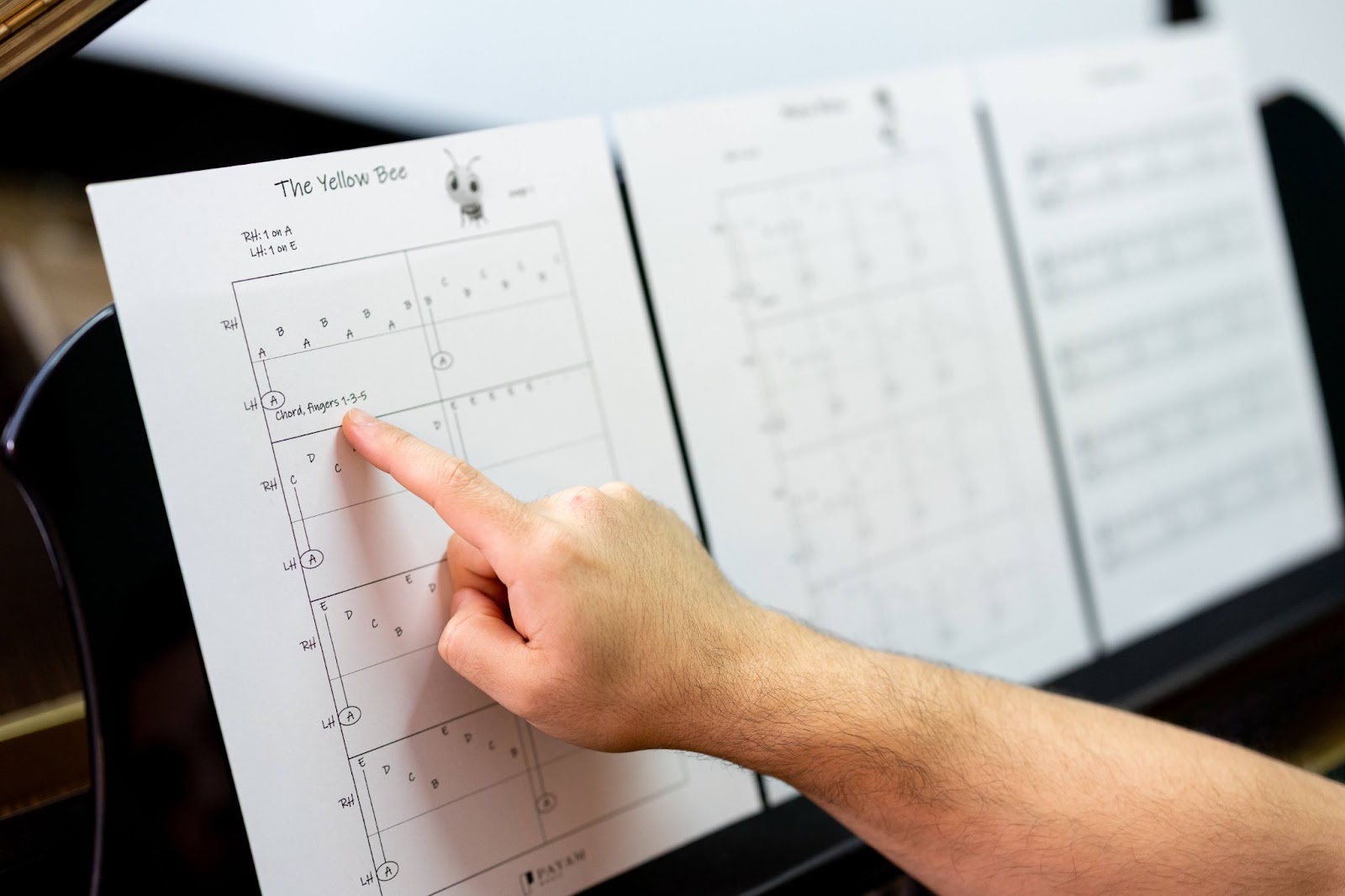
We start with our alphanumeric notation — using ABCs and 123s — to build confidence from day one. From the very first level, students develop an understanding of the basic techniques in piano, gaining confidence and learning to play music they love by following our proprietary method. Even though we start with letters and numbers as notation instead of traditional sheet music, they begin to understand intervals and note relationships. For example, in the sequence ABCDE, each letter is positioned progressively higher on the page in our alphanumeric notation.
Our students first learn the specific technique in the level in our alphanumeric notation, and once they’re comfortable and understand how to play it, they learn how to read it in traditional sheet music. This is the same approach language uses: a child first learns how to speak a word, understands the meaning, and then how to read it. Our notation allows for students to learn piano much more easily and then seamlessly transition into reading traditional sheet music.
Personalization
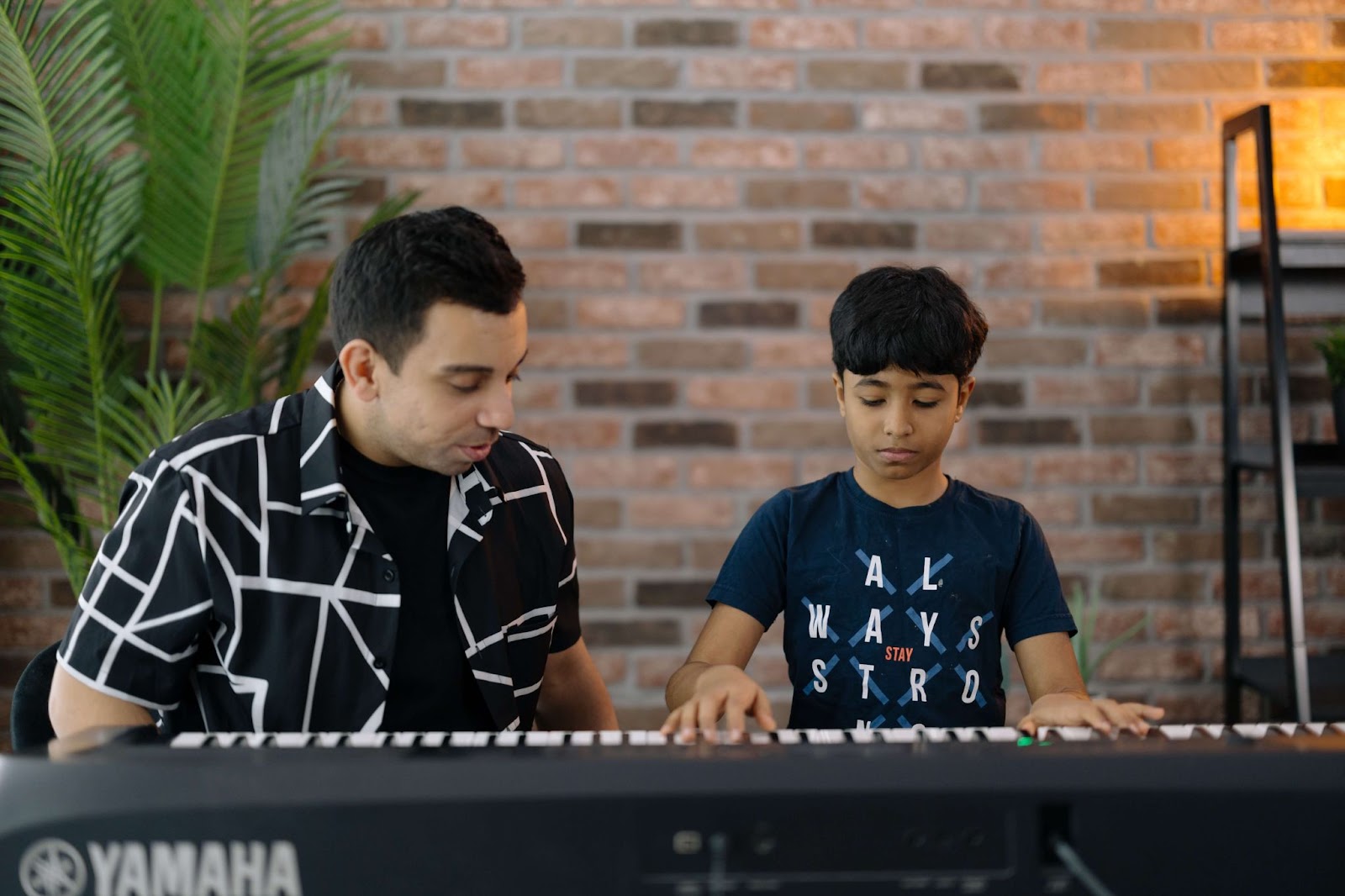
The traditional method of learning piano uses a book series, which teaches every student the same songs, regardless of their age, learning style or genre preferences. Since we compose our pieces in-house, our curriculum cleverly embeds classical piano theory into engaging songs. We customize arrangements to teach any song a student wants to learn, whether it’s a classical composition, a movie soundtrack, a chart-topping hit, or a Bollywood melody. Playing a song you already love makes practicing a joy, so much so that our students call it “fun-work” instead of homework. In addition to song selection, teachers personalize instruction based on a student's needs: learning style, feedback style, class duration, lesson frequency, and curriculum path.
Pattern recognition
Reading any language relies on pattern recognition. We don’t read letters one by one; we see words as whole units. The Payam Method applies this principle to music. Traditional sheet music often forces students to read individual notes, a slow and tedious process that can lead to frustration and quitting. We teach our students to recognize right-hand patterns and left-hand progressions, empowering them to read music holistically, not note by note.
Technique
Our method also builds on musical techniques, just as language learning builds on root words, prefixes, and suffixes. For example, if a student learns “at”, they can easily grasp words like cat, bat, hat, and mat. Similarly, we teach students to master each technique through a piece the students love, allowing them to apply it across multiple pieces. This is very different from traditional lessons where students tend to play the same set pieces over and over again.
Once the specific techniques a student is learning in our alphanumeric notation becomes second nature, they transition to learn that same technique in traditional sheet music. All students differ but even our youngest students reach this milestone within months, not years. This process continues back and forth, reinforcing each step, until students build a solid foundation — preparing them to transition to reading full sheet music without missing a beat.

Fun
Finally, while we believe in emphasizing the “play” in playing piano, our students discover their intrinsic motivation to excel. If you love what you do, you'll become good. Now imagine you love the instrument, you love the teacher, and you love the songs you learn. There's no way you won't become successful… but the results even blew us away. At Payam Music, 96% of our students reach diploma level in 4 years versus 2% of piano students reach diploma level in 12 years nationally. In 2024, Payam Music students competed in the PTA Reflections national competition against 300,000 students, securing 5 out of 5 top spots in Washington State, and 4 out of 14 nationally. We’re eagerly anticipating the 2025 results!
The Payam Method is more than a new way to teach piano. More importantly, it’s a way to build confidence and make learning an instrument a lifelong skill.
Frequently asked questions
Q: What is the Payam Method and how does it teach piano? A: The Payam Method is a proprietary piano-learning methodology developed by Payam Music that teaches piano using the psychology of language learning. It starts with alphanumeric notation (ABCs and 123s) instead of traditional sheet music, allowing students to learn how to "speak" music before reading it, similar to how children learn spoken language before written language.
Q: Does learning with alphanumeric notation help students transition to sheet music? A: Yes, absolutely. Once students become comfortable and understand techniques using alphanumeric notation, they learn to read those same techniques in traditional sheet music. This proven approach ensures students develop a solid understanding of intervals, note relationships, and techniques before transitioning to the more complex task of reading traditional notation.
Q: How do the five elements of the Payam Method work together? A: The five elements are notation (using ABCs and 123s for confidence), personalization (customizing arrangements for any song a student wants to learn), pattern recognition (teaching students to read music holistically rather than note-by-note), technique (building foundational skills applicable across multiple pieces), and fun (creating intrinsic motivation that leads to exceptional results).
Q: Can students choose the songs they want to learn with the Payam Method? A: Yes, personalization is a core element of the Payam Method. Because Payam Music composes its pieces in-house, teachers can customize arrangements to teach any song a student loves—whether it's a classical composition, popular song, or cultural melody—while embedding classical piano theory into these engaging songs.
Q: What are the long-term results of learning with the Payam Method? A: The results are remarkable: 96% of Payam Music students reach diploma level (the equivalent of a black belt in piano) within 4 years, compared to only 2% of piano students nationally who reach diploma level within 12 years. Additionally, Payam Music students have secured 5 out of 5 top spots in Washington State and 4 out of 14 spots nationally in the 2024 PTA Reflections competition.